
How to Tell If a Mole Is Cancerous
Most moles are harmless. But not all.
What often surprises people is this: skin cancer more commonly appears as a new spot rather than developing from an existing mole. That’s why any new or unusual change in your skin should never be ignored.
If you’re unsure whether a mole is dangerous, this guide explains what to look for, what matters most, and when to get it checked.

What are moles, and what’s normal?
Moles are extremely common and are made up of pigment-producing cells in the skin. Most remain stable over time, with a consistent colour and a regular shape.
The key is not just knowing what a mole looks like, but understanding what’s normal for your own skin. Changes are what matter, and recognising those changes is important.
Can you tell if a mole is cancerous yourself?
While you may be the first to notice subtle changes, diagnosis requires clinical expertise. Even experienced practitioners don’t rely on visual inspection alone. Some harmless moles can appear concerning, while some dangerous ones may not show obvious warning signs.
However, there are recognised patterns that can help identify when a mole needs further assessment.
The ABCDE rule doctors use
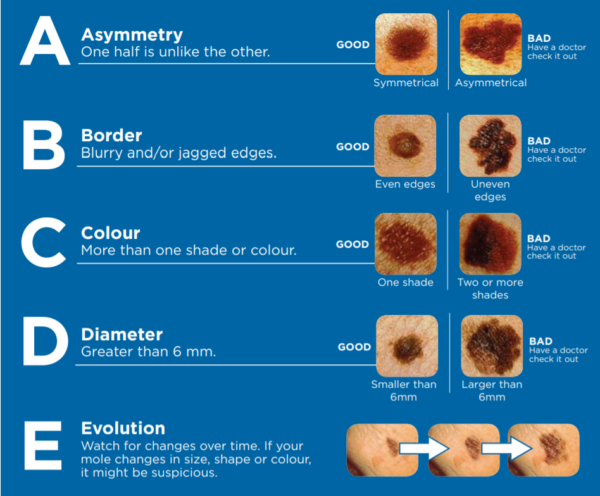
One of the most widely used tools is the ABCDE rule. It’s a simple way to assess whether a mole looks suspicious:
- A – Asymmetry: One half does not match the other.
- B – Border: The edges appear irregular, blurred, or jagged.
- C – Colour: The mole has uneven colouring or multiple shades (brown, black, pink, red, or white).
- D – Diameter: The mole is larger than 6 mm (about the size of a pencil eraser), although smaller ones can still be concerning.
- E – Evolving (most important): Any change in size, shape, colour, or sensation.
That final point carries the most weight. Change is often the strongest warning sign. If a mole is growing, changing colour, or developing new symptoms, it should be taken seriously.
Unsure about a specific mole? Speak to a specialist today.
The “ugly duckling” sign most people miss
There’s another clue that’s often more useful in everyday life:
Does one mole look different from all the others?
Most of your moles tend to look similar to each other. If one stands out — whether it’s darker, lighter, larger, or simply different — it may be a warning sign.
Clinicians call this the “ugly duckling” sign, and it’s one of the most practical ways to spot something unusual.
Common concerns people ask about
Can itchy moles be harmless?
Itching is one of the most common reasons people worry. The reality is that some harmless moles can itch. But if the sensation is new, persistent, or comes with visible changes, it shouldn’t be ignored.
Can moles be itchy or bleed?
Bleeding is more concerning, especially if it happens without any obvious injury. Crusting or inflammation can also be warning signs, particularly when combined with change.
Can hair grow in cancerous moles?
Hair growing from a mole is often assumed to mean it’s safe. That isn’t true. While many benign moles do have hair, cancerous moles can as well, so this isn’t a reliable indicator either way.
Can removing a mole cause cancer?
Another common myth is that removing a mole can cause cancer. It doesn’t. In fact, removing a suspicious mole is often how a diagnosis is confirmed.

Where melanoma can appear
When people talk about a “cancerous mole”, they are usually referring to melanoma, the most serious type of skin cancer that can develop from pigment-producing cells in the skin.
While melanoma can sometimes develop within an existing mole, it more commonly appears as a completely new mark on the skin.
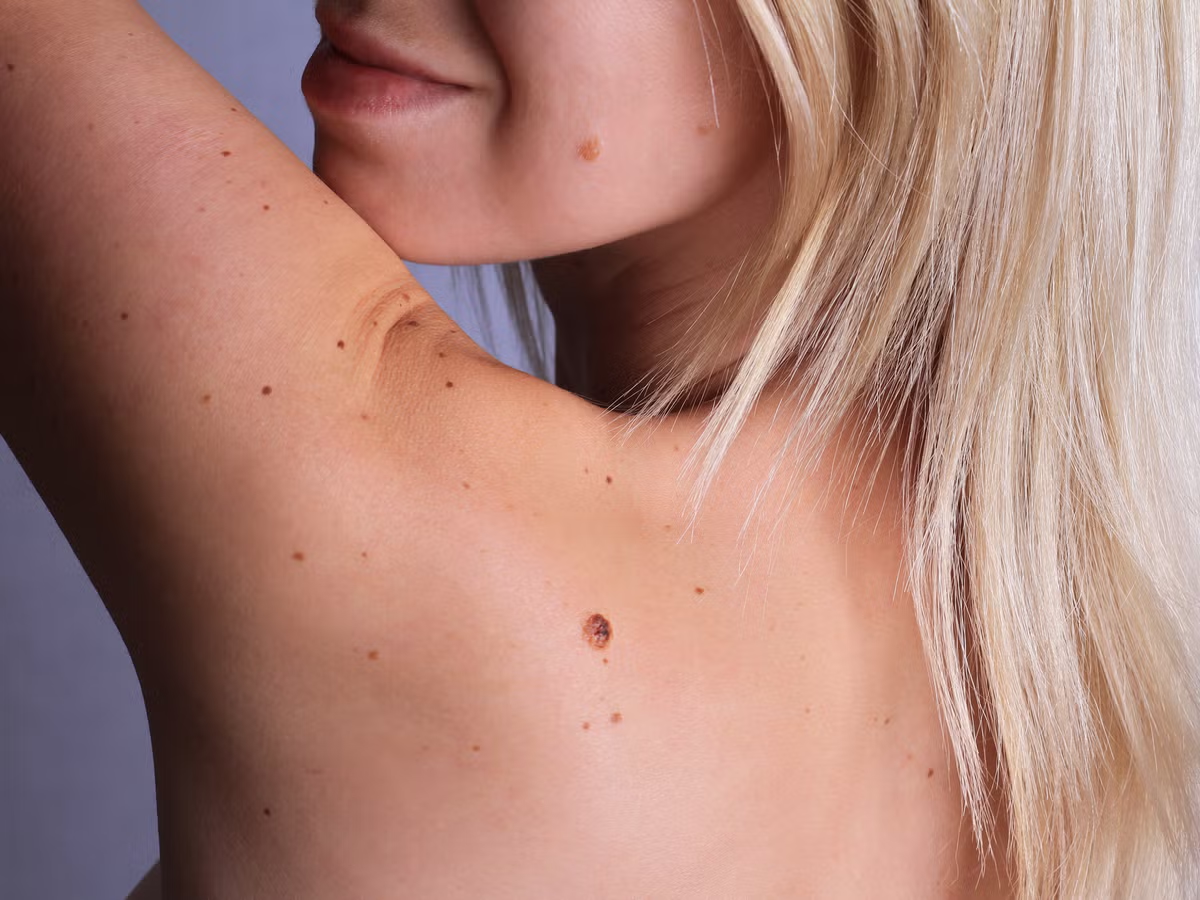
It’s also important to understand that it doesn’t only occur in sun-exposed areas. Melanoma can develop almost anywhere on the body, including the back, legs, soles of the feet, or even under the nails.
In people with darker skin tones, melanomas are more likely to appear in less visible areas such as the palms or soles, which makes regular, full-body skin awareness especially important.
That’s why a proper check isn’t just about what you can easily see.
What does a cancerous mole actually look like?
There is no single, consistent appearance.
Some moles follow the classic ABCDE signs; others do not. Some are dark, while others may be pink, red, or even colourless. Some look obviously irregular, while others appear subtle.
This variation is exactly why self-diagnosis is unreliable. Recognising what is new, changing, or unusual for you is far more important than memorising images.
When should you get a mole checked?
If a mole appears in adulthood, begins to change over weeks or months, looks different from your other moles, or starts to bleed, itch, or crust, it’s worth having it assessed.
Even if you’re unsure, that uncertainty alone is a valid reason to have it checked.
In a city like London, where we often don't see the sun for months, it's easy to forget about skin checks. However, UV damage is cumulative, and even occasional exposure over the years can contribute to changes in your skin.
Early detection plays a major role in outcomes. The earlier a problem is identified, the easier it is to manage.
If a mole requires further assessment or removal, it’s helpful to understand what the procedure involves, including safety, cost, and recovery. Read the full guide to mole assessment and removal, including details on pricing.
How quickly can a mole become cancerous?
How quickly a mole becomes cancerous can vary.
Some types of skin cancer develop slowly over years, while others can change much more rapidly. Any mole that evolves noticeably over weeks to months should be taken seriously.
How professionals check a mole
A proper assessment goes beyond a simple visual glance. Clinicians examine the mole closely, often using a dermatoscope, which magnifies the skin and reveals structures not visible to the naked eye.
You can learn more about how we use this technology in our professional mole checks and safe mole removal services in London.
In some cases, a mole may be monitored over time to track changes. If there’s any uncertainty, it can be removed and analysed in a lab. This is the only way to confirm whether it is cancerous.
The bottom line
You can’t reliably diagnose a mole yourself. But you can recognise when something isn’t right.
The most important signs are not just irregular shapes or colours — it’s change, newness, and difference.
If something stands out or doesn’t feel right, it’s better to have clarity than to wait.
Concerned about a mole?
If you’ve noticed a change or a new mark on your skin, the most important step you can take is getting a professional opinion. It’s a simple process that replaces uncertainty with clinical certainty.
At Revitalise London, our specialists use advanced dermatoscopy to examine your skin at a microscopic level, providing a level of detail that a simple visual check cannot reach. Whether it’s for peace of mind or a clinical necessity, we are here to provide clear answers and safe treatment options.
Don’t spend another week wondering about a changing mole. Fill out the form below to request a specialist callback, and let us help you get the clarity you deserve.
Frequently Asked Questions
You can’t confirm this yourself, but warning signs include changes in size, shape, or colour, irregular borders, multiple colours, or a mole that looks different from others. Any new or evolving mole should be checked by a specialist.
A cancerous mole may appear asymmetrical, have uneven edges, contain multiple colours, or grow over time. Some may also itch, bleed, or crust. However, not all cancerous moles follow a clear pattern.
You should get a mole checked if it is new, changing, bleeding, itching, or looks different from your other moles. Even if you are unsure, it is best to have it assessed by a professional.
Yes, some harmless moles can itch. However, if the itching is new, persistent, or combined with visible changes, it should be checked.
No, removing a mole does not cause cancer. In many cases, removal is used to diagnose whether a mole is cancerous.
Some moles change slowly over years, while others can evolve within weeks or months. Any noticeable or rapid change should be assessed promptly.
Yes, hair can grow from both harmless and cancerous moles. It is not a reliable sign that a mole is safe.
Melanoma can appear anywhere on the body, including areas not exposed to the sun such as the soles of the feet, palms, or under nails.
Some pharmacists may offer basic advice, but they are not specialists in diagnosing skin cancer. A proper assessment should be done by a trained clinician.
No, removing moles at home is not recommended. It can lead to scarring, infection, and missed diagnosis of serious conditions.
Our Medical Team
Meet the experienced professionals who will provide your care

Dr. Ken Otouke
Consultant Plastic Surgeon
GMC Number: 6087496
A pioneer in Plastic Surgery and specialising in Robotics, Dr Ken is a core member on the Board of Micro Surgery for the United Kingdom. Dr Ken had worked his way to the pinnacle of NHS duties but not before developing his skill set in the USA, Italy and Canada.

Dr. Nancy Abdel-Rehman
Specialist Interests in Dermatology
GMC Number: 7679511
Dr Nancy Abdel-Rehman is a highly skilled specialist with interests in Dermatology and extensive experience in diagnosing and treating a wide range of skin conditions. She specialises in advanced dermatological procedures, leveraging state-of-the-art technologies such as short and long pulse lasers to deliver exceptional care.
Jonny
Medical Assistant
Jonny is a dedicated Medical Assistant who provides essential support to our medical team. With a focus on patient care, he ensures our clinical operations run smoothly. Jonny assists with preparing patients for procedures, maintaining clinical records, and ensuring a comfortable and professional environment. His hard work and commitment are invaluable in upholding the high standards of care at Revitalise London.
Nathalie Emmanuel
Actress - Game of Thrones Star
Had a wonderful experience with Dr Ken and his staff with my forehead lipoma removal. Thorough in planning before the procedure and so far, l've had a great experience with aftercare. When I had any questions there was always someone available to answer them.